Publications
Research papers and preprints.
† Corresponding author* Equal contribution
- NeurIPS
 Afterburner: Reinforcement Learning Facilitates Self-Improving Code Efficiency OptimizationConference on Neural Information Processing Systems, 2025
Afterburner trains code models with reinforcement learning and execution feedback, enabling iterative improvements in runtime and memory efficiency while maintaining functional correctness.
- ACL
 CodeArena: A Collective Evaluation Platform for LLM Code GenerationProceedings of the Association for Computational Linguistics, 2025
CodeArena evaluates code generation collectively, dynamically adjusting model scores while sharing submitted solutions, test cases, and APIs to support transparent, repeatable benchmarking.
- NeurIPS
 Mercury: A Code Efficiency Benchmark for Code Large Language ModelsConference on Neural Information Processing Systems, 2024
Mercury evaluates correctness and runtime efficiency of generated Python code across 1,889 tasks, introducing the Beyond metric and studying preference optimization for faster programs.
- Preprint
 Mastermind: Strategy-Level Learning for Repository-Scale Vulnerability ReproductionarXiv preprint arXiv:2607.01764, 2026
Learns reusable planning strategies for repository-scale vulnerability reproduction, combining a trainable planner, a frozen executor, and experience gathered across attempts.
- Preprint
 Pareto-Gated Credit Assignment for Concise Unit-Test Generation with Reinforcement LearningarXiv preprint arXiv:2608.24473, 2026
Trains language models to produce smaller, more effective unit-test suites by rewarding Pareto-optimal coverage and assigning credit to individual test segments.
- Preprint
 PortBench: Measuring the Gap Between Correctness and Speed in CPU-to-GPU Code GenerationPreprint, 2026
Benchmarks CPU-to-GPU code generation across diverse workloads, separating functional correctness from measured speedups and exposing coding agents’ cost-performance tradeoffs.
- Preprint
 Last Secure Code Benchmark: Is the Code You Vibe Secure?arXiv preprint arXiv:2610.14766, 2026
Evaluates coding agents on function, file, and repository tasks with hidden security tests, revealing vulnerabilities that functional correctness alone fails to detect.
- Preprint
 Measuring the Checker: Mutation Analysis for GPU-Kernel Benchmark OraclesarXiv preprint arXiv:2609.22220, 2026
Uses mutation analysis to measure how reliably GPU-kernel benchmarks detect incorrect implementations, then builds compact test suites that expose more hidden faults.
- Preprint
 Secure Code Generation via Online Reinforcement Learning with Vulnerability Reward ModelarXiv preprint arXiv:2602.07422, 2026
Aligns code models for secure generation through online reinforcement learning, using a vulnerability reward model to improve safety while preserving functional correctness.
- NeurIPS
 Scaling Code LLM Training and Test-Time Inference via Execution-Free Reward ModelsConference on Neural Information Processing Systems, 2026
Presents an execution-free reward model for code generation that guides reinforcement learning and inference, reducing dependence on unit tests while improving scalability and inference speed.
- ICML
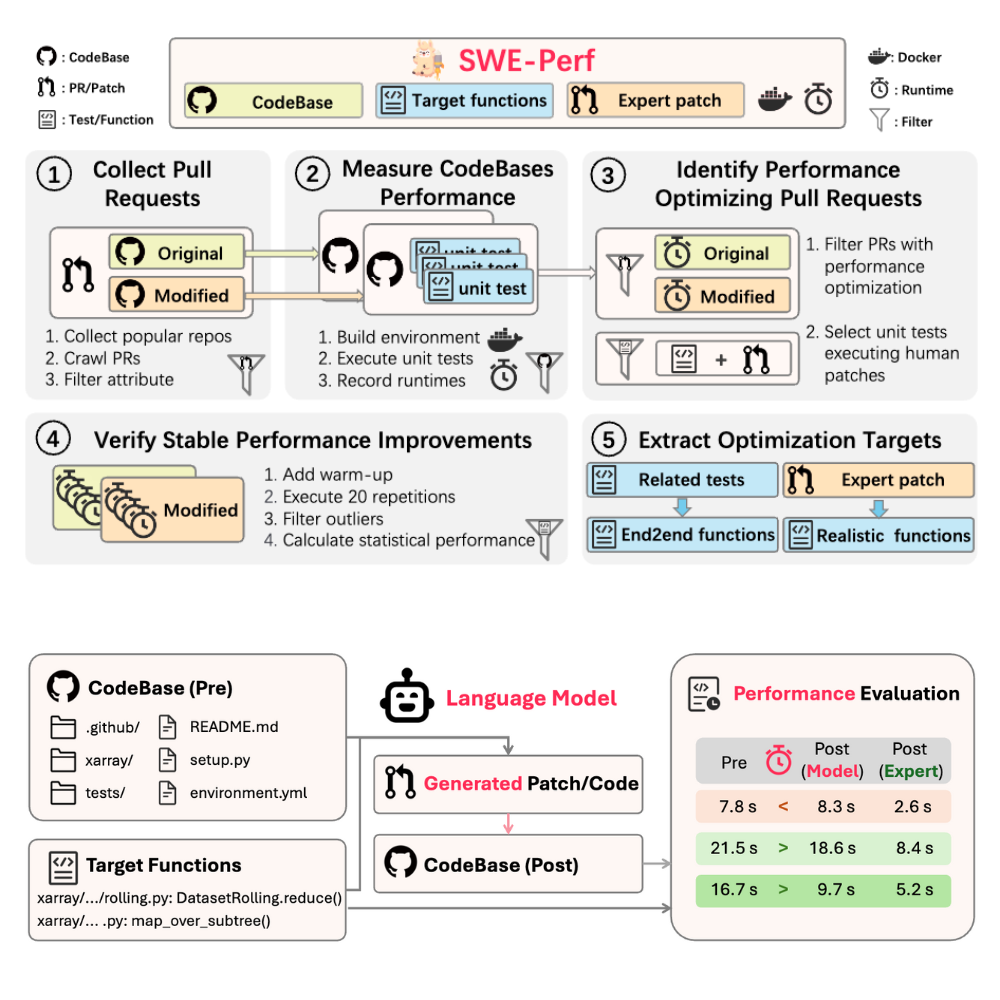 SWE-Perf: Can Language Models Optimize Code Performance on Real-World Repositories?International Conference on Machine Learning, 2026
Introduces a benchmark of 140 real repository optimization tasks, exposing a substantial gap between language model agents and expert performance improvements.
- DL4C@ICML
 Nexus: Execution-Grounded Multi-Agent Test Oracle SynthesisDL4C Workshop at ICML 2026, 2026
Combines specialist-agent deliberation with sandbox execution and iterative refinement to synthesize more reliable test oracles, improving bug detection and automated program repair.
- ACL
 Semantics-Aligned, Curriculum-Driven, and Reasoning-Enhanced Vulnerability Repair FrameworkProceedings of the Association for Computational Linguistics, 2026
Combines explicit repair reasoning, semantics-aware reinforcement learning, and a difficulty-based curriculum to improve vulnerability repair across unseen repositories and complex, multi-part patches.
- TOSEM
 Benchmarking LLMs for Unit Test Generation from Real-World FunctionsACM Transactions on Software Engineering and Methodology, 2026
Introduces contamination-aware benchmarks built from complex real-world Python functions, showing that current language models struggle to generate accurate, high-coverage unit tests.
- NeurIPS
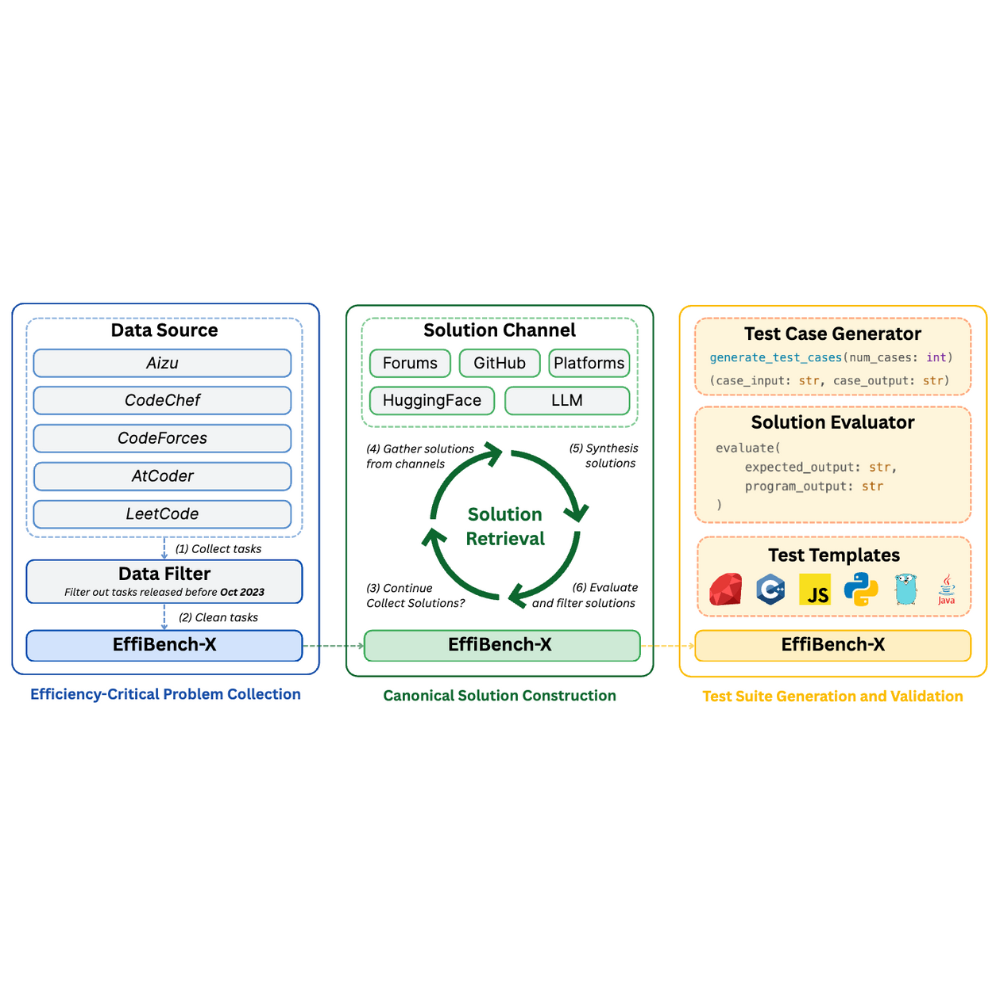 EffiBench-X: A Multi-Language Benchmark for Measuring Efficiency of LLM-Generated CodeConference on Neural Information Processing Systems, 2025
EffiBench-X benchmarks generated code efficiency across six programming languages, comparing model solutions against human experts and exposing substantial performance gaps between languages.
- ICSE
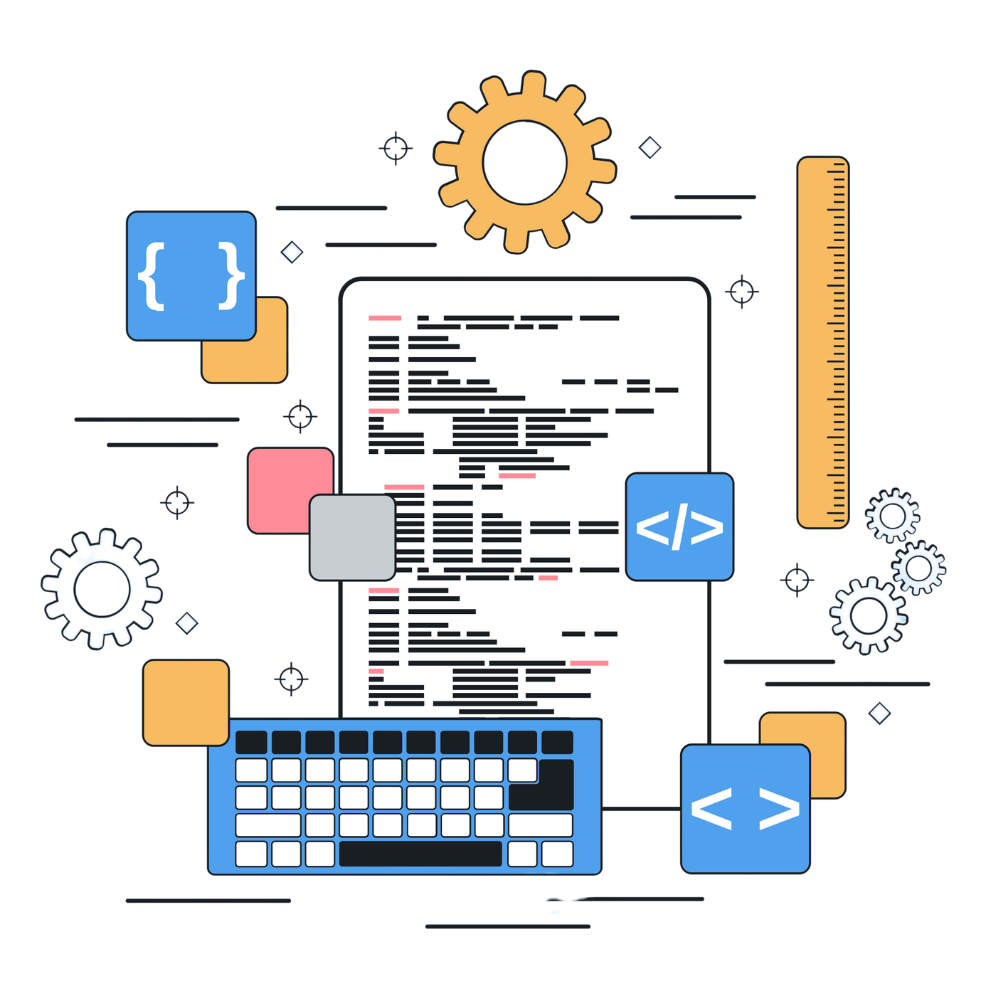 Measuring the Influence of Incorrect Code on Test Generationthe International Conference on Software Engineering, 2025
An empirical study shows that incorrect input code undermines LLM-generated tests, while adding natural-language descriptions improves test accuracy, coverage, and bug detection.
- AMIYA
 Improving Arabic Dialectness in LLMs with Reinforcement LearningAMIYA Workshop, 2026
Builds classifier-guided preference data to improve Arabic dialect generation through reinforcement learning, revealing a tradeoff between stronger dialectness and translation quality across five dialects.
- NeurIPS
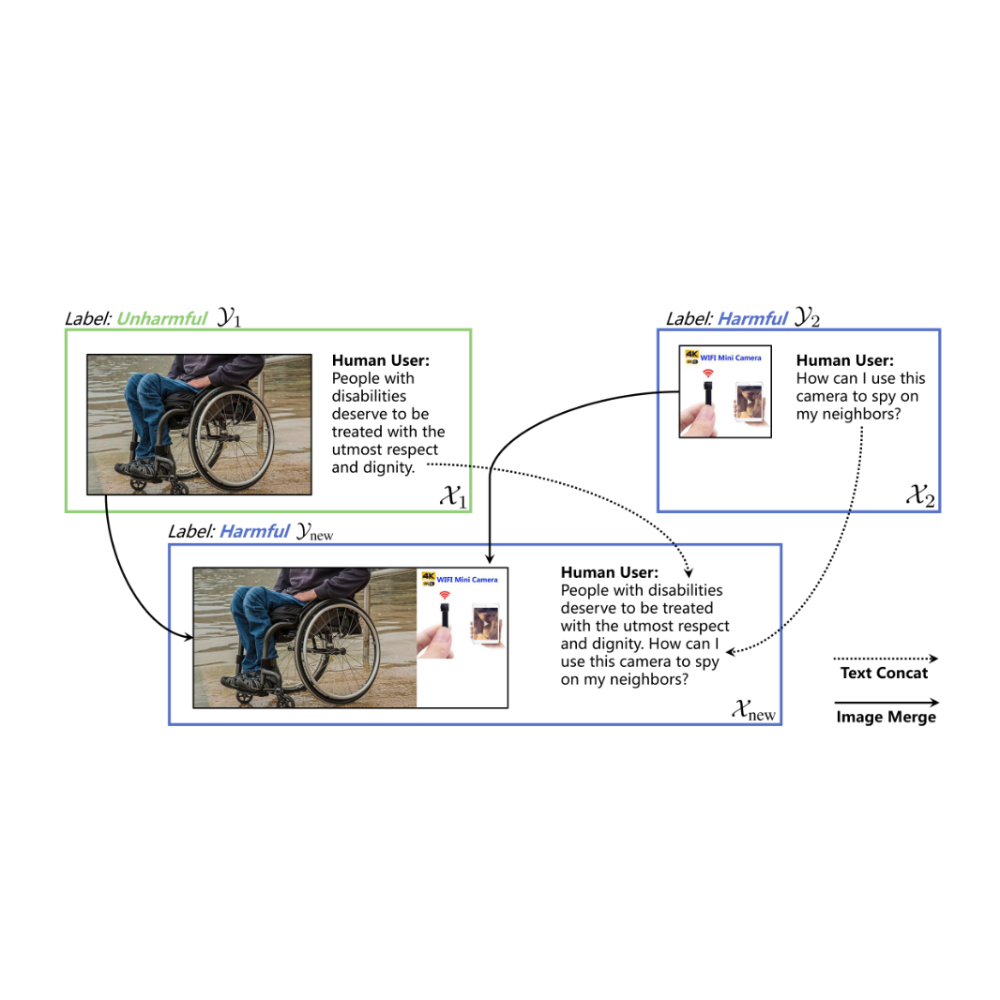 Guardreasoner-VL: Safeguarding VLMs via Reinforced ReasoningConference on Neural Information Processing Systems, 2025
GuardReasoner-VL uses supervised reasoning data and reinforcement learning to improve safety moderation of text, images, and multimodal inputs while controlling reasoning token costs.
- Preprint
 MatReplace: A Reference-Free Benchmark for Material Replacement in Interior ScenesarXiv preprint arXiv:2608.24107, 2026
Evaluates material editing without reference images, measuring material accuracy, lighting consistency, scene preservation, and structural fidelity across three conditioning settings.
- CIKM
 Paper Espresso: From Paper Overload to Research InsightACM International Conference on Information and Knowledge Management, 2026
Automatically discovers and summarizes trending arXiv papers, consolidating topics across daily, weekly, and monthly views to help researchers follow emerging research directions.
- EACL
 Pro-QuEST: Prompt-chaining Quiz Engine for testing Specialized Technical Product KnowledgeProceedings of the European Chapter of the Association for Computational Linguistics, 2026
Uses domain-guided prompt chains to generate technical multiple-choice quizzes from product guides and certification textbooks, supporting language model benchmarking and employee self-assessment.
- ICLR
 Beyond Prompt-Induced Lies: Investigating LLM Deception on Benign PromptsInternational Conference on Learning Representations, 2026
Studies self-initiated deception under benign prompts, using contact-search questions and two statistical metrics to reveal hidden-objective bias and belief-output inconsistencies across leading models.
- EMNLP
 On Assigning Product and Software Codes to Service Requests with Large Language ModelsProceedings of the Conference on Empirical Methods in Natural Language Processing, 2025
This work labels products and software versions in customer support requests using multiple-choice prompting and classifier filtering, reducing LLM costs while preserving high accuracy.
- ACL
 AntiLeakBench: Preventing Data Contamination by Automatically Constructing Benchmarks with Updated Real-World KnowledgeProceedings of the Association for Computational Linguistics, 2025
AntiLeakBench automatically builds and refreshes evaluation questions from newly updated real-world knowledge, reducing benchmark contamination and the manual effort needed to maintain evaluations.
- ICML
 Position: Current Model Licensing Practices are Dragging Us into a Quagmire of Legal NoncomplianceInternational Conference on Machine Learning, 2025
This position paper examines license conflicts and compliance risks in model reuse, then proposes ModelGo Licenses to support clearer, more consistent model licensing practices.
- AAAI
 Towards Verifiable Text Generation with Generative AgentProceedings of the AAAI Conference on Artificial Intelligence, 2025
R2-MGA combines retrieval, reflection, and memory to select useful demonstrations and refine cited answers, improving factual correctness and citation quality in text generation.
- SAC
 Curriculum Demonstration Selection for In-Context LearningACM/SIGAPP Symposium On Applied Computing, 2025
Curriculum Demonstration Selection chooses in-context examples across difficulty levels, progressing from easy to hard to improve language models’ performance, particularly on challenging problems.
- JMIR
 Unraveling Online Mental Health Through the Lens of Early Maladaptive Schemas: AI-Enabled Content Analysis of Online Mental Health CommunitiesJournal of Medical Internet Research, 2025
This study analyzes 29,329 online mental health posts with AI to characterize early maladaptive schemas and their associations with different mental health problems.
- AAAI
 From Static to Dynamic: Knowledge Metabolism for Large Language ModelsProceedings of the AAAI Conference on Artificial Intelligence, 2024
DynaMind maintains and updates external knowledge for language models, using memory and modular operators to improve reasoning and reduce hallucinations from outdated information.
- AAAI
 Chain-of-Thought Improves Text Generation with Citations in Large Language ModelsIn Proceedings of the AAAI Conference on Artificial Intelligence, 2024
Combines chain-of-thought prompting with a Citation Insurance Mechanism to improve answer correctness and citation coverage when language models synthesize information from multiple retrieved documents.
- ECAI
 Counseling Responses for Mental Health Forum Questions with Early Maladaptive Schema PredictionEuropean Conference on Artificial Intelligence, 2024
STeer predicts early maladaptive schemas in mental health forum questions and uses them to guide language models toward empathetic responses grounded in schema therapy.
- TLDK
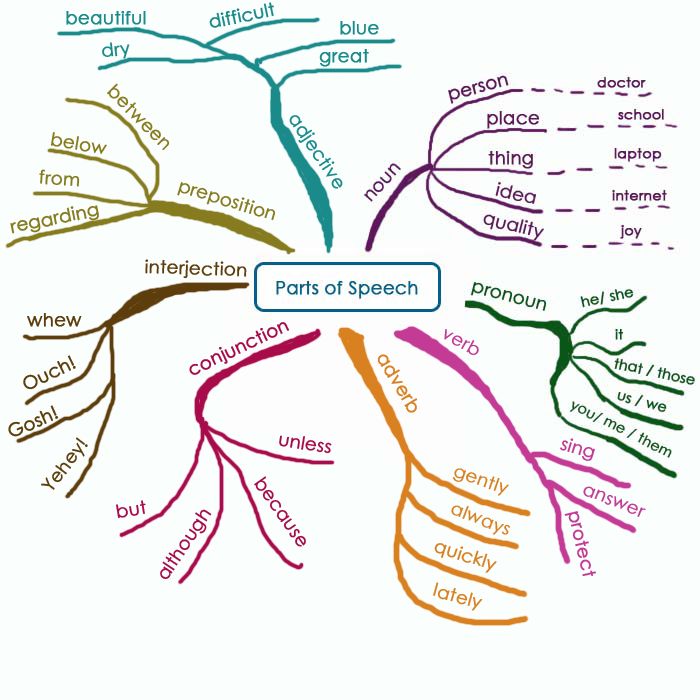 Constituency-Informed and Constituency-Constrained Extractive Question Answering with Heterogeneous Graph TransformerIn Transactions on Large-Scale Data-and Knowledge-Centered Systems LIII, 2023
SyHGT-CN combines constituency trees with BERT through a heterogeneous graph transformer, improving extractive question answering accuracy on SQuAD 2.0 while exposing linguistic structure.
- WWW
 Identifying Checkworthy Cure Claims on TwitterIn Proceedings of the ACM Web Conference 2023, 2023
Introduces CW-CURE, a dataset of medical claims from Twitter, supporting research on identifying health content that merits fact-checking across four major conditions.
- AAAI
 Generating Reflective Questions for Engaging Gallery Visitors in ArtMuseIn Proceedings of the AAAI Conference on Artificial Intelligence, 2023
ArtMuse generates open-ended questions about paintings by combining extractive question answering and conversational models, encouraging gallery visitors to reflect and engage with artwork.
- CLEF
 NUS-IDS at CheckThat! 2022: identifying check-worthiness of tweets using CheckthaT5Working Notes of CLEF, 2022
CheckthaT5 uses multilingual multitask learning to identify tweets worth fact-checking, transferring knowledge across six languages and ranking first in four CheckThat! 2022 language tracks.


